

Sound Beginnings is owner run and managed by Heidi Sheppard, who has designed the programme of education for the school. The programme follows school readiness protocols which align with Western curricula standards (like CAPS, A-level; IEB) to ensure children are well prepared to enter primary school.
Heidi’s teaching career began as a music teacher at George Randall Primary School in East London after obtaining a BA in Clinical Psychology and Sports Science; a PGCE (Counselling, English, Physical Education) and a Music Diploma at Rhodes University. After teaching for several years and following relocation to the UK she set up her own business in education where she designed a preschool musical development programme which became instituted into preschool networks (Montessori), Leisure centres and private health centres across Surrey and South-west London. The programme offered dynamic music-and-movement learning opportunities for the preschool child and proved to be extremely successful.
Returning to South Africa in 2006 she obtained an Honours degree in Education at the University of Cape Town (UCT) and has worked as a registered SACE teacher on a freelance basis ever since to ensure she could be a mum-at-home to her two children. Having recently completed a Master’s in Education at UCT (researching the learning needs of the Foundation Phase child) and with children currently near completion of their tertiary education, the opportunity presented itself to begin a school to share this newfound knowledge. New insights gained have naturally been incorporated into the programme design, yet music, movement and creative play remain at the heart of it. The Covid pandemic has motivated the need to keep classes small so learning can continue safely, with the result the school operates from Heidi’s home (dedicated classroom).
The school’s motto echoes Heidi’s philosophy of learning as ‘fun through play’ for it is through play that a lifelong love of learning begins. Heidi school day is supported by a friendly teacher assistant who firstly loves children and who secondly, is suitably qualified and experienced.
About Our Programme :
A. General Aims
Our first and primary aim at Sound Beginnings is to produce happy, confident, self-aware children with enquiring minds interested in all they hear, see and do. We ensure every child is given the opportunity to:
- Play as a happy member of a group
- Grow self-confidence and self-expression of feelings through talking and listening, and doing
- Learn from what they can do and explore further what they cannot yet do
- Test out ideas and discover how things work
- Be caring towards themselves, their peers, the adults responsible for their care.
- Develop a moral compass to understand what is right and what might be unacceptable
- Grow dramatic, physical movement and music potential
- Grow knowledge of numbers and develop language skills
- Grow an appreciation of the environment.
B. Specific Aims
Sound Beginnings uses a topic-based play-centred method of teaching wherever possible to enable young children to easily link ideas during learning. Teaching occurs through art, drama, music and physical movement.
There is no ceiling to the limits of a child’s knowledge and enquiry and there is no boundary to the breadth of information which they may demand to know. Whilst children’s learning journeys are as individual as they are, we strive to achieve a minimum set of learning goals studies have shown are attainable at each developmental stage.
The programme is designed to cater for ages 2 to 3 and 3 to 6 years with the learning goals for each of these age groups listed separately. However, the learning goals only serve as a guideline. Generally, the longer children spend with us, the more advanced and diverse their needs become, which we endeavour to cater for. For instance, taking number development, it has not been uncommon for a younger year child on our program to learn mathematics concepts tantamount to what might be expected for a child a year or two older. We do not hold children back since such learning benefits a child when formal schooling begins.
The learning outcomes are outlined for each of the respective age groups. The most desirable learning goals are covered under six categories (these often overlapping with other categories).

Learning outcomes for ages 2 to 3 years
Communication, Language and Literacy
- Develop language, listening and concentration skills through stories, rhyming stories and songs (African and Euro-centric)
- Develop a love and appreciation of books and encourage the use of pictures to retell a known or new story
- Phonics: Recognise certain vowel and consonant sounds and be able to map them to letter symbols recognising how they are used in short words
- Develop pencil control through patterns, colouring, writing
- Write the letters of the alphabet and numbers (mainly gross motor hand-eye co-ordination)
- Develop spoken language through small group interaction like free play opportunities, role-play opportunities, singing, storytelling, puppetry, taking leadership roles
- Use language to communicate with adults and peers as a means of extending vocabulary
- Understand the purpose of writing and how reading and writing move from the left to the right margin.
Numbers / Mathematics
- Use mathematical concepts (like bigger/smaller, more/less than, in front/behind)
- Developing a concept of time (yesterday, today, tomorrow)
- Patterns and sequences using objects of play like beads
- Learning the count sequence through stories, number songs/action songs, games (1 – 10)
- Counting practice mapping one count to one word and its related symbol
- Introduction to the concept of measurement and weight through water play, sand play, height charts using comparison
- Use of mathematical vocabulary (how much/many)
Knowledge and Understanding of the World (Life Skills)
- Colours
- Days of the week, months of the year
- Past, present, future
- Families
- Environment
- Cultures of South Africa
- Science – How things work? Develop. Observe.

Physical Development/Musical Development
- Structured movement patterns to develop confidence and free expressive movement to develop creativity
- Develop co-ordination through movement which uses balance, rolling and climbing skills, for example
- Develop awareness of others through use of space (individual and group activities)
- Learn to work as a member of a team co-ordinating repeated movement sequences
- Fine and gross motor movement development. Develop hand-eye co-ordination using props like bats, balls, beanbags, parachutes (also through art projects)
- Use of Outdoor play areas like our local garden, our local park and nature walks along the lakefront where birdlife is plentiful
- Rhythm development using movement with the tonic solfa to link musical ideas, like walk for ‘taa’, run for ‘ta-te’, slow walk as ‘taa-aa’, gallop as ‘taa-fe’ and skip as ‘fe-taa’. These get mapped to the musical notes such as crotchet, quaver, minim using percussion instruments and stage-relevant musical scores.

Creative Development through Art, Drama, Music and percussion instruments
- Develop self-awareness and imagination through mediums like creative play, art, physical movement, storytelling, puppetry, music-making with percussion instruments and dance
- Foster Imaginative play involving craft activities like collage, painting, gluing, cutting, folding, modelling, playdough
- Learn to interpret and understand the world through the five senses
- Explore different textures and materials like wood, fur, metal.

Personal, Social and Emotional Development
- Making friends
- Developing confidence and respect for self and others
- Working in small and large groups in the capacity of team member, team leader or teacher
- Working with or without assistance, instruction taking and offering suggestions
- Develop positive attitudes towards learning
- Tackling new experiences and taking reasonable risks
- Listening and caring with an awareness of feelings of self and others, making appropriate responses.

Learning Outcomes for children ages 3 to 5 years
These goals encompass those for the two through three age group with the addition of the following goals, although these goals do not limit what the child may learn during these years. Ongoing assessments of children’s learning ensure we cater for their needs beyond these outcomes where early mastery is evident. In these instances, they are individually catered for which is only possible because we keep our classes small.
Language, Literacy, Life Skills
- Extending listening and concentration skills using longer, more involved stories (read books and audio tapes), spoken and sung rhymes (African and Euro-centric)
- In-depth discussion of books with significant other (older child or teacher) following a reading activity, discussing ideas like time or day, opposites apparent, why certain outcomes occurred, decisions of the protagonist
- Develop leadership skills through peer teaching in respect of 2-3 age group
- Read and write letters (chalkboard, gross motor muscles) of the alphabet and begin to recognise small key words applying phonetics (beginning, middle and end sounds)
- Retell known or popular stories or own made up stories
- Life skill themes which are age appropriate
- Activities which extend memory (tray game; pairs).

Mathematics
- Learn number words to 20 or beyond and map these to the relevant number symbol and counting objects in sets. This is done through number games
- Develop an understanding of the operations of arithmetic like ‘add and subtract’ eventually applying the formal mathematical notation (3 + 2 = 5, 5 – 2 =3)
- Extending mathematical concepts like bigger/smaller, more/less than, in front/behind
- Developing a concept of time introducing the clock face
- Patterns and sequences
- Introduction to measurement as volume (water play) and weight (baking activities, perceptual guesswork); distance (tape measures, rulers, height charts, own hands or feet)
- Use of mathematical vocabulary (how much/many).
Knowledge and Understanding of the World, Self and Others (Life skills)
- Memory games
- Our role in a family
- Environment and how to care for it
- Cultures of South Africa: how to deal with apparent differences in the context of viewing similarities
- Past, Present and Future; Calendars (days, months, year); Seasons; Weather
- Science – How things work? Develop. Observe. For example: an introduction to magnetism by playing with magnets
- Biology/Environment: Life cycles (butterfly, frog)
Physical Development/Musical Development
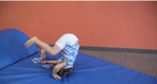
- Improved co-ordination executing movements like forward rolls, backward rolls, head stands and handstands
- Co-ordination, balance and climbing skills
- Self -awareness and use of space
- Learn to work in a team co-ordinating movement patterns
- Fine and gross motor movement development
- Extended memory games using extending repeating movement patterns (obstacle courses)
- Develop hand-eye co-ordination using props like bats, balls, beanbags, parachutes (also through art projects)
- Using knowledge of rhythm patterns and musical notation (taa, tate, taa-fe, fe-taa, taa-aa, taa-aa-aa-aa), dynamics (loud, soft, long, short sounds), pitch (high, middle, low of the tonic solfa as doh, meh, soh) invent games and scores
- Obstacle courses
- Games with rules: croquet, swing-ball, golf, hopscotch, jumping bags, three-legged races, egg-and-spoon races.
- Musical development (rhythm, pitch, duration, texture, dynamics like soft and loud) using percussion instruments
- Dramatic movement.